Archives

Remember to Take Your Bitters! Grandma’s Longevity Plan

Life can be bittersweet, with tears of joy and tears of pain. But when it comes to the bitter flavor, that is one taste we have not learned to appreciate. Foods and herbs that are bitter are also highly nutritive and have profound healing properties. No wonder our grandparents and great-grandparents used herbal bitters as part of their longevity plan.

So, I take my bitters first thing in the morning, just like Grandma used to do. My mouth begins to water, and the digestive juices start to flow. They are best taken as a tonic, consistently over time. And as one of my mentors would say, “Bitters make everything in the body that likes to squirt – to squirt!” Think of squeezing a squishy, rubbery ball. Bitter works by astringing (squeezing) and toning our glands and organs, like salivary glands that squirt saliva and the gallbladder that squirts bile. It’s a fun way to visualize how the bitter flavor tones these body parts.

Bitter is a substance with an astringent taste, stimulating the flow of saliva (sialagogue), gastric juices, the digestive process, and the appetite. For this reason, it must be tasted on the tongue to stimulate a cascade of reactions that begin in the mouth with salivation and get the juices flowing. Bitter receptors on the tongue send a message to the brain to stimulate a physiological response. Some bitters include bitter alteratives, tonic-astringents, mild bitters, aromatic bitters, bitter demulcents, bitter anodynes, and bitter laxative tonics. Different kinds of bitter receptors are widely distributed in human tissue, including the digestive tract, pancreas, respiratory tract, placenta, white blood cells, heart, brain, thyroid, skin, and testes. We don’t yet know the role of all these bitter receptors, but we see the effect of digestive and dietary bitters, which have been widely studied.

Bitters promote the secretion of digestion hormones and the production of stomach acid that prepares the gut to receive a meal. They increase appetite, peristalsis, and digestive secretions in the stomach and intestines. Bitter herbs and foods have formed the bedrock of herbalism since ancient times. Every natural healing system recognizes them as an essential category of herbs, “food as medicine.” Bitter is the most common flavor found among medicinal herbs. And while bitterness is unpleasant, it can also warn of potentially toxic constituents. These are strong medicines and why they have become commonly used in herbal medicine.

The ancient, wise, and time-tested Chinese Five Element Theory system has much to say about the profound impact of bitter foods and herbs on health. Bitter is seen as having nutritive value, and if we lack this “nutrient,” then dis-harmony and disease become predictable. Modern science bears out that bitter herbs can work metabolic wonders in stimulating healthy digestion, aiding liver detoxification, improving kidney function, participating in blood sugar regulation, stimulating immunity, improving nutrient assimilation, and assisting as a natural laxative.

Bitter is the most deficient flavor in the modern diet. That, in part, contributes to the epidemic rise in inflammatory conditions and chronic illness. The bitter flavor cools inflammation and an overheated liver, the organ responsible for detoxifying some of the most harmful substances that enter the body through air, water, food, or skin. Certain bitter herbs can even help the liver regenerate itself. No pharmaceutical can do that. All pharmaceuticals overheat the liver. Milk thistle is an example of an herb that supports and protects the liver (hepatoprotectant).

In the wisdom of the Chinese Five Elements, the bitter flavor corresponds to the Fire Element and the summer season. The bitter flavor is essential in summer as a yin tonic because it clears excess heat caused by yin (Water Element) deficiency.

More people today have excess heat symptoms due to a deficiency of cooling yin fluids (blood, lymph, hormones, all secretions, intracellular fluids, etc.). The bitter flavor helps to restore the deep yin of the Water Element (Kidneys & Adrenals).

The heart and small intestine are the organ system that corresponds with the Fire Element. Most heart problems involve deficiency. The heart in Chinese Medicine refers to Western medicine’s nervous and circulatory system. It is impacted by the constituents (alkaloids and glycosides) commonly found in bitter herbs, which include their antimicrobial and anti-inflammatory actions. In the case of a fever (excess Fire), bitter roots like goldenseal are considered antipyretic and anti-inflammatory, helping to clear the heat of infection and reduce fever. The bitter flavor can neutralize heat symptoms that arise in any season.

Bitter is useful in dishes and diets to control excess Fire or tonify Water. Celery is a mildly bitter food for clearing heat, cleaning arteries of cholesterol and fats, and helping lower blood pressure. This is one of the reasons we have seen the recent rise of its popularity for juicing. Chamomile is also a mild bitter and a tonic when taken daily as a tea. But beware! It will become unpalatably bitter if you leave it steep for too long. The strongest bitters are in the herbal realm, including burdock root, dandelion root, yellow dock, motherwort, and many more. Yellow dock is incredibly supportive of stubborn anemia and helps increase hemoglobin levels in the blood.

Summer heat creates heat in the heavens and fire on Earth; they create the heart and the pulse within the body, red color, the ability to express laughter, bitter flavor and emotions of happiness and joy. —Inner Classic

In Chinese Medicine, Fire and Water are two ends of the same spectrum and have a symbiotic relationship. Water’s coolness keeps the heart’s fire in check, while fire’s heat keeps the Water Element from freezing or becoming stagnant. The bitter flavor is the most underused and needed due to the widespread excesses of the Wood Element (liver & gallbladder) and overconsumption that leads to an overheated liver. Fire fed by excess Wood burns hot and out of control, depleting of the deep, watery feminine yin, which is at the root of most imbalances, including hormonal imbalances.

Yin deficiency symptoms typify the modern person who is uneasy and anxious with abundant energy that is mostly appearance and, in reality, lacks the deep, watery yin reserves. This deficiency is evident not only in people and the institutions they create but in the Earth itself as high-quality food and water sources dwindle. Actions that build a substantial yin foundation for an individual are the same ones that restore the planet.

Yin deficiency and adrenal burnout, caused by an overheated liver and the excesses of our overachieving Western society, are epidemic. The imbalances are far-reaching and evidenced by global warming, fires, flooding, mass extinctions, and environmental systems collapse. Restoring the deep feminine yin contains the potential for planetary restoration.

Our ancestors, particularly our great-grandmothers, understood the significance of herbal bitters as a pre-meal tonic. When taken before a meal, these bitters stimulate metabolism, aid in digestion, and contribute to overall health. Unfortunately, the most vital and bitter parts of whole foods are often refined away. These crucial components, rich in cooling minerals like magnesium and selenium, offer protective and rejuvenating benefits. It’s no surprise that the lack of these vital elements contributes to the widespread lack of vitality in people today.

Bitter herbs can work wonders for restoring bodily systems. They stimulate healthy digestion and immune function, increase bile production, improve nutrient assimilation, aid in liver detoxification and regeneration, improve kidney function, assist in blood sugar regulation, provide a natural laxative, and reduce inflammations. SO REMEMBER TO TAKE YOUR BITTERS!

Most common bitter foods are actually combinations of bitter and other flavors, and are listed below.

Bitter Foods: Amaranth, arugula, asparagus, bitter melon, carrot top, celery dandelion greens, endive, escarole, orange peel, rhubarb, romaine lettuce, oat, quinoa, rye, and watercress.

Bitter Herbs: Alfalfa, angelica, aloe, black walnut, boneset, burdock root, cascara sagrada, California poppy, chamomile, chaparral Chaparro armagosa, chickory root, dandelion root, echinacea root, elecampane, goldenseal root, hops flowers, horsetail, milk thistle seeds, motherwort, mugwort, Oregon grape root, pau d’ arco, red root, rhubarb root, turmeric, valerian, vervain, willow, wormwood, yarrow and yellowdock.

Bitter and Sweet: Amaranth, artichoke leaf, asparagus, celery, chicory root, elderflower, lettuce, papaya, quinoa, turmeric, and turnip.

Bitter and Sour: Blackberry leaf, orange peel, and vinegar.

Bitter and Pungent: Angelica, citrus peels, radish leaf, scallion, turnip, and white pepper.

Bitter Roots: Burdock, dandelion, gentian, goldenseal, echinacea, Oregon grape root, red root, yellow dock, and yellow root.

Bitter Chinese Herbs: Andographis, coptis, gardenia, gentian, phellodendron, pulsatilla and skullcap.

Bitter Grains (The bitter aspect of grains is in their germ and bran): Farro, quinoa, rice, spelt, and wheat.

Note: Severely deficient people can’t tolerate intensely bitter food or herbs for any length of time.

Learn more in Thea’s online classes at Wise Woman School:

Love Your Liver: Spring & the Wood Element

Heal Your Heart: Nervous System Health & the Fire Element

Read Thea Summer Deer on Substack for Elder Wisdom & Good Medicine

Chinese Herbal Chicken Soup for Optimal Health

The benefits of bone broth are now well known, but you can kick it up a notch by adding these Chinese Herbs during the last hour of cooking. Consider it as extra insurance for your immune system. I have broken down the medicinal benefits of each herb in this soup which I have found healing for myself and my family. You can learn more about the energetics of food in Indian Summer: Nourishing the Earth Element and Wisdom of the Five Flavors course at Five Element Academy. If you don’t want to buy the herbs individually, I recommend Plum Dragon’s Chicken Soup Herb Pack. You will find the recipe on their website: Plum Dragon Herbs.

The Herbs:

Astragalus Root (Huang Qi) – Helps to prevent and treat corona viruses (common cold & flu) and upper respiratory infections. Its herbal actions include: immunomodulator, anti-inflammatory, antibacterial, antioxidant, cardioprotective, hepatoprotective, and adaptogenic. Astragalus is a nervous system tonic, immune tonic, and Spleen qi tonic (diabetes). Considered a foundational herb in TCM, Astragalus, in addition to being a deep immune system activator, also strengthens the lung qi and the surface immune system, which is the first line of defense against pernicious influences. It also appears to enhance nonspecific and specific immunity. Astragalus is a beneficial herb for anyone who might be immune-compromised. Learn more by reading my Wisdom of the Plant Devas Blog post, Astragalus for Myocarditis, Long Covid, & Immune Support

Codonopsis Root (Dang shen) –  A superb Qi tonic used to invigorate the Spleen and Lung and treat yin deficiency. It is an excellent Blood tonic and a major immune system tonic. Codonopsis has powerful strengthening effects, especially on the digestive, respiratory and immune systems and has been used since antiquity to build strong, healthy children.

Solomon’s Seal (Yu Zhu) – The key actions of Solomon’s Seal are demulcent, expectorant, sedative, and tonic. It has an affinity for the Lung and Stomach, can help with a dry cough and sore throat, and is most prized as a yin tonic. Yin tonics work by restoring the Water Element (Kidney), which cools the Liver (Wood Element). Tendons and ligaments are the body part that correspond with the Wood Element, and this is why Solomon’s Seal is used to help heal injured tendons, and restore proper tension to ligaments. It does this by its ability to nourish yin, moisten dryness, and to nourish and moisten sinews. Solomon’s Seal also quells wind, relieving pain and spasms due to wind generated fluid deficiency. Learn more by reading my Wisdom of the Plant Devas Blog post, Solomon’s Seal: Adapting to Stress & Achieving Flexibility in Times of Change

Angelica Sinensis (Dang Gui) – A superior blood tonic that supports healthy blood circulation, especially in the abdomen and pelvic basin. It also has analgesic and mild sedative (calming, relaxing) actions.

Chinese Yam (Shan Yao) – Energetically sweet it strengthens the Spleen and Stomach, and nourishes the Earth Element. Learn more in Indian Summer: Nourishing the Earth Element

Goji Berries (Gou Qi Zi) – Also known as Wolfberries, they are nutritious, improve immune function, and increases energy.

Dried Figs (Wu Hua Guo) – An energetically neutral food (yin & yang balanced) and known to moisten the lungs and relieve coughs. Energetically sweet they invigorate the Spleen.

Dried Red Dates (Hong Zao) – Balance qi and nourish the Blood. Improves insomnia and protects the Liver.

Resources:

Chinese Soup Pot: Delicious Soups For Optimal Health

Thea Summer Deer’s Blog: The Carnage of Waste

Note: I review products independently and only recommend ones that I have used personally. As a Plum Dragon affiliate I may earn a commission from qualifying purchases.

Think You Have an Ulcer? Think Again: H. Pylori and Mastic Gum

Pistacia lentiscus in flower

Pistacia lentiscus in flower

I had wanted to write this article on mastic gum as an effective treatment for Helicobacter pylori for some time now, but it was Dr. OZ’s Christmas Eve show that finally did it. When a friend who knew that I had healed myself of H. pylori reported that this and ulcers were the topic of today’s Dr. OZ Show, I was all ears. I was glad the show was helping the general public to make the connection between ulcers and H. pylori, as this has long been overlooked. Regardless, doctors rarely recommend one of the easy tests that detect H. pylori to patients presenting with ulcer symptoms. While kefir was mentioned for these symptoms, most of the folks on the show had never heard of kefir. And while this helps to increase awareness of the importance and necessity for probiotics, kefir doesn’t cure H. pylori.[1] It was when I heard the final recommendation for H. pylori was antibiotics, however, that I knew I couldn’t put off writing this article any longer.

Let me start by sharing my own story. For years I had this on and off again burning in the pit of my stomach. It was worse at night and felt like a gnawing hunger that might feel better if I ate something to help coat or soothe my stomach, but eating made no difference. After a while, I surmised that I must have an ulcer. I tried digestive enzymes but that didn’t work. Then I tried antacids and H2 blockers, which are completely against my belief system of treating symptoms and not the cause, and they made no difference whatsoever. I did notice, however, that eliminating sugar helped.

mastiha_tear2

Mastic gum resin

Then I had a recurrent mold exposure that launched a raging sinus infection. My eyes swelled shut. Yellow puss oozed from them, and my throat swelled to where I could hardly swallow. I feared not being able to breathe. So, I immediately went to the doctor. Neither he nor I wanted for me to go to the hospital. So he prescribed not penicillin but “gorilla-cillin,” a powerful antibiotic combination without ever diagnosing the specific pathogen culprit. After this round of antibiotics, my sinus infection got better, but the “ulcer” got significantly worse. I started having pressure in my esophagus. I went back to another doctor, a gastroenterologist. She recommended an endoscopy, but I declined in favor of doing additional research on my own. This doctor suggested that I might have an ulcer as well as an overgrowth of candida in my esophagus. I did not want to undergo an invasive test, but I needed to know what created that much havoc in my body. My research revealed information connecting ulcers to H. pylori infection, which the doctor neglected to mention. I also learned that statistically, up to 90% of duodenal ulcers might be caused by a Helicobacter pylori (H. pylori) infection. Medical science had previously assumed that stress, spicy food, or excess stomach acid caused ulcers.

So I went back to the doctor for my yearly exam and requested a blood test for the H. pylori bacterium. Several non-invasive tests exist for evaluating the presence of the bacteria, including blood, saliva, stool, or a breath test. However, the most reliable method is a biopsy check during endoscopy. I opted for the blood test.

At least half the world’s population is infected with H. pylori making it the most widespread infection. And while contagious, the exact route of transmission is not known. Findings suggest that it is more easily transmitted via gastric mucus than via saliva. It may also be transmitted via contaminated well water, soil, or from food harvested in fields where workers defecate. It is also very possible that houseflies act as a viable source of spread since they frequently come into contact with human food and fecal matter.

When I returned to the doctor’s office for my blood results, I sat in the waiting room for almost an hour before being brought into an exam room. I was left there alone for another hour before the doctor finally arrived. During that time in the exam room, I noticed a small paperback reminiscent of a Readers Digest on the counter next to the sink. It contained articles on the latest drug recommendations for various conditions, and I busied myself reading it. I was surprised when I turned to an article on H. pylori and the recommended antibiotic cocktail for curing it. H. pylori is a growing concern in the pharmacological literature.

The doctor finally arrived and apologized for being late. She had been going over the results of my blood work. She happily announced that everything looked normal: blood sugar, cholesterol, thyroid, white and red blood cell count, etc. I had to ask her, “what about the H. pylori?” She had completely overlooked it and had to scramble through her paperwork to find the results. “Oh!” she said, quite flustered, “You are positive for H. pylori!” Obviously, she had not spent the last hour looking over the result of my blood work. I flashed the article on H. pylori from her magazine that I found in her exam room and told her she might want to read up. She then prescribed the routine antibiotic cocktail, which included Flagyl (an antibiotic drug also used to treat Candida with serious possible side effects[2]). Since I had good insurance, I filled the prescription and carried a grocery bag full of drugs that included antibiotics and a proton pump inhibitor home with me.

I sat contemplating this turn of events. The fact that a round of antibiotics had put my “ulcer” symptoms over the top in the first place and caused what I felt to be an overgrowth of H. pylori, just like they can cause an overgrowth of Candida, I could not bring myself to take them. In addition, an increasing number of infected individuals harbor antibiotic-resistant bacteria and report a high treatment failure rate (up to 20%) requiring additional rounds of antibiotic therapy, which further discouraged me. It made sense that I had noticed a reduction of symptoms by eliminating sugar since perhaps sugar feeds H. pylori, just like it does Candida. Then, I started a timeline of my symptoms and realized that they had started after a round of antibiotics for an earlier sinus infection, also from mold exposure. Further research showed that H. pylori is a member of the normal flora, which helps to regulate stomach acidity. When symptoms accompany an overgrowth, that is when it becomes a problem. Common sense told me to avoid antibiotics.

OLYMPUS DIGITAL CAMERAIt seemed clear that I needed to bring the H. pylori under control, but not only did I not want to take the antibiotics, I was also downright afraid of taking them. So I went back to the computer to look for alternatives to antibiotics. What I found was mastic gum. And not surprisingly as I have a lot of faith in plant medicine.

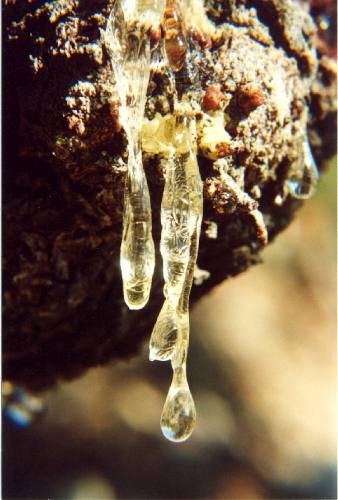
l_410709Mastic gum is a tree resin produced by an evergreen shrub from the pistachio tree family, Pistacia lentiscus. The tree hails from the Greek island of Chios, and the resin is known as “Chios tears” because once the bark is slit, it trickles out slowly creating crystal-like “tears.” In some shops, it is called “Arabic gum,” not to be confused with gum arabic. The word mastic is a synonym for gum in many languages and is derived from the Greek verb, “to gnash the teeth,” which is the source of the English word, masticate. Greeks have been chewing on these resin granules for centuries, consumed to freshen the breath, cut down on bacteria in the mouth, and remove dental plaque. Ground, it is used in a variety of baked goods for its rich aroma and licorice-like flavor. Used since antiquity as a medicine and in the Middle East for at least 3,000 years, mastic is still being used in the traditional folk medicine of the Middle East for gastric ailments.

One of my herbal mentors, Patricia Kyritsi Howell, goes to Greece every year and affirmed the power of this medicine for healing gastric complaints. Production is controlled by a co-operative of medieval village in the south of Chios and granted protected designation of origin. Traditionally there has been limited production of mastic, further threatened by the Chios forest fire that swept the southern half of the island in August 2012 and destroyed many of the mastic groves. During the Ottoman rule of Chios, mastic was worth its weight in gold. I would argue that it still is. The benefit of this “tree-medicine,” as I like to call it, is now being rediscovered for its antimicrobial effects. The most exciting of these discoveries is its effectiveness against at least seven different strains of H. pylori with no side effects.

Chios, Greece

Chios, Greece

H. pylori are spiral-shaped bacteria that live in the mucosal lining of the stomach. The genus name, Helicobacter, is derived from the ancient Greek “spiral” or “coil”. Pylori means “of the pylorus” or pyloric valve, a circular opening leading from the stomach into the duodenum and is from an ancient Greek word meaning “gatekeeper.”

Mastic gum works by making changes within the bacteria’s cell structure, causing it to weaken and die. An article published by the New England Journal of Medicine titled “Mastic Gum Kills Helicobacter pylori” suggested that even low doses of mastic gum can cure peptic ulcers very rapidly. In several studies using mastic gum on ulcer patients, the original site of the ulcer caused by the bacterium was completely replaced by healthy epithelial cells.

The protocol that I have found to be the most effective is to start out slowly and increase the amount taken over a three-week period as follows:

Mastic Gum Extract, 500 mg. capsules,

Week 1: take 2 in the morning on an empty stomach one hour before breakfast for one week.

Week 2: Up the dosage to 4 per day, adding 2 in the afternoon on an empty stomach.

Week 3: Up the dosage to 6 for a total of 3 grams per day, adding 2 in the evening on an empty stomach (2 hrs. after dinner, one hour before bed.)

Die-off can cause nausea, so back off on the dosage if you start to feel nauseous. If needed, you can do a second round of the protocol. You may want to retest via a stool sample after a month or so. A blood test will not be accurate because of the antibodies. Be sure to add a good probiotic to your regimen following treatment.

Mastiha_productionI have used this protocol to heal myself of H. pylori and in my clinical practice very successfully. One client shared it with her doctor after the stool sample returned negative. That is why we need herbalists with their “feet on the ground,” so to speak, and working first hand with the plant medicines. We cannot always depend on clinical trials funded by pharmaceutical companies or doctors knowledge whose education is also funded by pharmaceutical companies. The more of us who share our herbal knowledge, the more we will learn how to alleviate suffering and hopefully bring enough attention to alternative medicine to get the research funded that is so badly needed.  It is in this spirit that I share my experience with the tree medicine of mastic gum. I can also attest that the results are long-lasting as it has been over ten years since curing my H. pylori. My yearly physical exam was last month, and I am happy to announce that the blood work (I had to specifically request a test for H. pylori) came back negative for the bacterium. And so it is.

References:

1. Wang KY, Li SN, Liu CS et al. (September 2004). “Effects of ingesting Lactobacillus- and Bifidobacterium-containing yogurt in subjects with colonized Helicobacter pylori. The American Journal of Clinical Nutrition 80 (3): 737–41.

2. Pounder RE, Ng D (1995). “The prevalence of Helicobacter pylori infection in different countries”. Aliment. Pharmacol. Ther. 9 (Suppl 2): 33–9.

3. Cave DR (May 1996). “Transmission and epidemiology of Helicobacter pylori“. Am. J. Med. 100 (5A): 12S–17S; discussion 17S–18S

4 Brown LM (2000). Helicobacter pylori: epidemiology and routes of transmission”. Epidemiol Rev 22 (2): 283–97.

5 Blaser MJ (February 2005). “An endangered species in the stomach”. Sci. Am. 292 (2): 38–45. doi:10.1038/scientificamerican0205-38

6. Al-Said MS, Ageel AM, Parmar NS, Tariq M. Evaluation of mastic, a crude drug obtained from Pistacia lentiscus for gastric and duodenal anti-ulcer activity. J Ethnopharmacol 1986;15:271-8.


[1] An article in the American Journal of Clinical Nutrition found evidence that “ingesting lactic acid bacteria exerts a suppressive effect on Helicobacter pylori infection in both animals and humans,” noting that “supplementing with Lactobacillus and Bifidobacterium containing yogurt was shown to improve the rates of eradication of H. pylori in humans. (see reference below)

[2] Metronidazole crosses the placental barrier and enters fetal circulation rapidly. It is prescribed during pregnancy for the vaginal infection, trichomoniasis. Metronidazole is a carcinogen and may cause serious central and peripheral nervous system side effects such as: convulsive seizures, meningitis, and optic neuropathy.