Archives

Remember to Take Your Bitters! Grandma’s Longevity Plan

Life can be bittersweet, with tears of joy and tears of pain. But when it comes to the bitter flavor, that is one taste we have not learned to appreciate. Foods and herbs that are bitter are also highly nutritive and have profound healing properties. No wonder our grandparents and great-grandparents used herbal bitters as part of their longevity plan.

So, I take my bitters first thing in the morning, just like Grandma used to do. My mouth begins to water, and the digestive juices start to flow. They are best taken as a tonic, consistently over time. And as one of my mentors would say, “Bitters make everything in the body that likes to squirt – to squirt!” Think of squeezing a squishy, rubbery ball. Bitter works by astringing (squeezing) and toning our glands and organs, like salivary glands that squirt saliva and the gallbladder that squirts bile. It’s a fun way to visualize how the bitter flavor tones these body parts.

Bitter is a substance with an astringent taste, stimulating the flow of saliva (sialagogue), gastric juices, the digestive process, and the appetite. For this reason, it must be tasted on the tongue to stimulate a cascade of reactions that begin in the mouth with salivation and get the juices flowing. Bitter receptors on the tongue send a message to the brain to stimulate a physiological response. Some bitters include bitter alteratives, tonic-astringents, mild bitters, aromatic bitters, bitter demulcents, bitter anodynes, and bitter laxative tonics. Different kinds of bitter receptors are widely distributed in human tissue, including the digestive tract, pancreas, respiratory tract, placenta, white blood cells, heart, brain, thyroid, skin, and testes. We don’t yet know the role of all these bitter receptors, but we see the effect of digestive and dietary bitters, which have been widely studied.

Bitters promote the secretion of digestion hormones and the production of stomach acid that prepares the gut to receive a meal. They increase appetite, peristalsis, and digestive secretions in the stomach and intestines. Bitter herbs and foods have formed the bedrock of herbalism since ancient times. Every natural healing system recognizes them as an essential category of herbs, “food as medicine.” Bitter is the most common flavor found among medicinal herbs. And while bitterness is unpleasant, it can also warn of potentially toxic constituents. These are strong medicines and why they have become commonly used in herbal medicine.

The ancient, wise, and time-tested Chinese Five Element Theory system has much to say about the profound impact of bitter foods and herbs on health. Bitter is seen as having nutritive value, and if we lack this “nutrient,” then dis-harmony and disease become predictable. Modern science bears out that bitter herbs can work metabolic wonders in stimulating healthy digestion, aiding liver detoxification, improving kidney function, participating in blood sugar regulation, stimulating immunity, improving nutrient assimilation, and assisting as a natural laxative.

Bitter is the most deficient flavor in the modern diet. That, in part, contributes to the epidemic rise in inflammatory conditions and chronic illness. The bitter flavor cools inflammation and an overheated liver, the organ responsible for detoxifying some of the most harmful substances that enter the body through air, water, food, or skin. Certain bitter herbs can even help the liver regenerate itself. No pharmaceutical can do that. All pharmaceuticals overheat the liver. Milk thistle is an example of an herb that supports and protects the liver (hepatoprotectant).

In the wisdom of the Chinese Five Elements, the bitter flavor corresponds to the Fire Element and the summer season. The bitter flavor is essential in summer as a yin tonic because it clears excess heat caused by yin (Water Element) deficiency.

More people today have excess heat symptoms due to a deficiency of cooling yin fluids (blood, lymph, hormones, all secretions, intracellular fluids, etc.). The bitter flavor helps to restore the deep yin of the Water Element (Kidneys & Adrenals).

The heart and small intestine are the organ system that corresponds with the Fire Element. Most heart problems involve deficiency. The heart in Chinese Medicine refers to Western medicine’s nervous and circulatory system. It is impacted by the constituents (alkaloids and glycosides) commonly found in bitter herbs, which include their antimicrobial and anti-inflammatory actions. In the case of a fever (excess Fire), bitter roots like goldenseal are considered antipyretic and anti-inflammatory, helping to clear the heat of infection and reduce fever. The bitter flavor can neutralize heat symptoms that arise in any season.

Bitter is useful in dishes and diets to control excess Fire or tonify Water. Celery is a mildly bitter food for clearing heat, cleaning arteries of cholesterol and fats, and helping lower blood pressure. This is one of the reasons we have seen the recent rise of its popularity for juicing. Chamomile is also a mild bitter and a tonic when taken daily as a tea. But beware! It will become unpalatably bitter if you leave it steep for too long. The strongest bitters are in the herbal realm, including burdock root, dandelion root, yellow dock, motherwort, and many more. Yellow dock is incredibly supportive of stubborn anemia and helps increase hemoglobin levels in the blood.

Summer heat creates heat in the heavens and fire on Earth; they create the heart and the pulse within the body, red color, the ability to express laughter, bitter flavor and emotions of happiness and joy. —Inner Classic

In Chinese Medicine, Fire and Water are two ends of the same spectrum and have a symbiotic relationship. Water’s coolness keeps the heart’s fire in check, while fire’s heat keeps the Water Element from freezing or becoming stagnant. The bitter flavor is the most underused and needed due to the widespread excesses of the Wood Element (liver & gallbladder) and overconsumption that leads to an overheated liver. Fire fed by excess Wood burns hot and out of control, depleting of the deep, watery feminine yin, which is at the root of most imbalances, including hormonal imbalances.

Yin deficiency symptoms typify the modern person who is uneasy and anxious with abundant energy that is mostly appearance and, in reality, lacks the deep, watery yin reserves. This deficiency is evident not only in people and the institutions they create but in the Earth itself as high-quality food and water sources dwindle. Actions that build a substantial yin foundation for an individual are the same ones that restore the planet.

Yin deficiency and adrenal burnout, caused by an overheated liver and the excesses of our overachieving Western society, are epidemic. The imbalances are far-reaching and evidenced by global warming, fires, flooding, mass extinctions, and environmental systems collapse. Restoring the deep feminine yin contains the potential for planetary restoration.

Our ancestors, particularly our great-grandmothers, understood the significance of herbal bitters as a pre-meal tonic. When taken before a meal, these bitters stimulate metabolism, aid in digestion, and contribute to overall health. Unfortunately, the most vital and bitter parts of whole foods are often refined away. These crucial components, rich in cooling minerals like magnesium and selenium, offer protective and rejuvenating benefits. It’s no surprise that the lack of these vital elements contributes to the widespread lack of vitality in people today.

Bitter herbs can work wonders for restoring bodily systems. They stimulate healthy digestion and immune function, increase bile production, improve nutrient assimilation, aid in liver detoxification and regeneration, improve kidney function, assist in blood sugar regulation, provide a natural laxative, and reduce inflammations. SO REMEMBER TO TAKE YOUR BITTERS!
Most common bitter foods are actually combinations of bitter and other flavors, and are listed below.

Bitter Foods: Amaranth, arugula, asparagus, bitter melon, carrot top, celery dandelion greens, endive, escarole, orange peel, rhubarb, romaine lettuce, oat, quinoa, rye, and watercress.

Bitter Herbs: Alfalfa, angelica, aloe, black walnut, boneset, burdock root, cascara sagrada, California poppy, chamomile, chaparral Chaparro armagosa, chickory root, dandelion root, echinacea root, elecampane, goldenseal root, hops flowers, horsetail, milk thistle seeds, motherwort, mugwort, Oregon grape root, pau d’ arco, red root, rhubarb root, turmeric, valerian, vervain, willow, wormwood, yarrow and yellowdock.

Bitter and Sweet: Amaranth, artichoke leaf, asparagus, celery, chicory root, elderflower, lettuce, papaya, quinoa, turmeric, and turnip.

Bitter and Sour: Blackberry leaf, orange peel, and vinegar.

Bitter and Pungent: Angelica, citrus peels, radish leaf, scallion, turnip, and white pepper.

Bitter Roots: Burdock, dandelion, gentian, goldenseal, echinacea, Oregon grape root, red root, yellow dock, and yellow root.

Bitter Chinese Herbs: Andographis, coptis, gardenia, gentian, phellodendron, pulsatilla and skullcap.

Bitter Grains (The bitter aspect of grains is in their germ and bran): Farro, quinoa, rice, spelt, and wheat.

Note: Severely deficient people can’t tolerate intensely bitter food or herbs for any length of time.

Learn more in Thea’s online classes at Wise Woman School:

Love Your Liver: Spring & the Wood Element

Heal Your Heart: Nervous System Health & the Fire Element

Read Thea Summer Deer on Substack for Elder Wisdom & Good Medicine

Astragalus for Myocarditis, Long COVID, & Immune Support

Astragalus Membranaceus

When I work with herbs, I feel like I’m on a secret mission, called by ancestral voices whispering plant names from somewhere across the veils of time and space. There is much to discover undercover with medicinal roots like Astragalus membranaceus, used since ancient times in Traditional Chinese Medicine (TCM).

Formerly introduced to Astragalus in herbal medicine school, I began buying the diagonally sliced dried root in bulk to add to nutritious bone broth soup stocks. But it has taken years of working with this herb in clinical practice to begin to grasp its full healing potential.

One client in particular obtained remarkable results from taking an Astragalus formula. She presented with diarrhea that had persisted for three months. And as is usually the case, she came to me after repeated testing and doctor visits. She had been tested for parasites, had extensive blood work, and undergone a colonoscopy. Less than 48 hours on an Astragalus formula, her diarrhea stopped for good. The cause of her debilitating condition turned out to be a round of topical corticosteroids prescribed by her doctor for an autoimmune disease (lichen sclerosis). This client had a history of exhausted adrenals since childhood. She should never have prescribed a corticosteroid with a known side effect of Cushing Syndrome (cortisol stress hormone imbalance) with diarrhea as a symptom. Astragalus stimulates pituitary-adrenal cortical activity and has been combined with drug therapies to reduce toxicity and ameliorate side effects.

After that experience, I began further research on Astragalus. Its herbal actions include immunomodulator, anti-inflammatory, antibacterial, antioxidant, cardioprotective, hepatoprotective, and adaptogenic. Astragalus is a nervous system tonic, immune tonic, and spleen qi tonic (diabetes). Tonics are herbs, that when taken consistently over time, may restore whole bodily systems. Astragalus is also used to relieve diarrhea, and weakness and fatigue, from prolonged illness. The benefits list is long and includes helping regulate blood sugar, improving stroke recovery, slowing or preventing the growth of tumors. Regular use of the root, it has been shown, can prevent kidney and liver damage caused by medication and viruses.

Considered a foundational herb in TCM, Astragalus, in addition to being a deep immune system activator, also strengthens the lung qi and the surface immune system, which is the first line of defense against pernicious influences. It also appears to enhance nonspecific and specific immunity. Astragalus is a beneficial herb for anyone who might be immune-compromised.

While many call Astragalus an immune system booster or immune stimulant, it more accurately enhances and supports immune system function, helping to prevent colds, flu, bronchitis, pneumonia, and the viral infection Coxsackie B, which is a significant cause of myocarditis.

Myocarditis is an inflammation of the heart muscle (myocardium), which is the middle layer of the heart wall. That inflammation can reduce the heart’s ability to pump and cause rapid or irregular heart rhythms (arrhythmias). According to the Mayo Clinic, an underlying inflammatory or autoimmune condition can raise your risk of myocarditis. Myocarditis is a concern with COVID-19 vaccination and in long-haul COVID. The risk of myocarditis exists from both the disease and the vaccine. There have also been case reports of myocarditis linked to flu and tetanus shots.

The COVID-19 vaccine can cause inflammation of the heart muscle (myocarditis) and inflammation of the outer heart lining (pericarditis). – Mayo Clinic

Teens and young adults are most at risk. VAERS statistics for cardiac events are high. Understaffed, overwhelmed, and backlogged, the FDA has not analyzed all the data on reports of myocarditis by their projected date of January 2022 before approving the shot for children. There is no incentive by pharmaceutical companies to ensure the safety of vaccine recipients because they assume no liability.

In June 2021, the Center for Disease Control and Prevention’s Advisory Committee on Immunization practices reported a likely link between mRNA COVID-19 vaccinations and myocarditis, particularly in people 39 and younger. A CDC spokesperson told Reuters, “It is true that since 1990 most of the myocarditis and pericarditis reports to VAERS were made after the U.S. COVID-19 vaccination program began.” Myocarditis is a condition that can weaken the heart and affect its electrical system.

TCM understands myocarditis as a disruption of the Fire Element (Heart). Vaccines disrupt the yin Water Element (Kidney/Adrenal) and insult the Kidney jing (ancestral inheritance). A depleted Water Element no longer tempers fire. Fire burns out of control and creates a vicious cycle of depletion. That is where we see the root of myocarditis. Astragalus, however, increases Water’s reserves and supports the immune system to do its job.

Used in China for at least 2,000 years, Astragalus is one of the fifty fundamental herbs used in TCM and listed as an official drug (Radix Astragali) in the modern Pharmacopoeia of the People’s Republic of China. It has become one of the primary immune tonic herbs in Western Pharmacopoeia.

Energetically sweet, warm, and nourishing, the dried root is used in soup stocks to strengthen the entire system. Astragalus tonifies the kidneys and adrenals and regulates the body’s immune system responses.

One article published in PubMed.gov says, “ It should be studied as a new drug for the treatment of sepsis.” Septic pneumonia following a cytokine storm is seen in patients presenting at the hospital with severe flu and COVID. Cytokine storms are related to infections as they progress towards sepsis. When the body loses control of cytokine production, the result is a cytokine storm.

Some cytokines make the disease worse (pro-inflammatory) and need inhibiting. Others serve to reduce inflammation and promote healing (anti-inflammatory). The intelligence of Astragalus does both, as does a normal response of a healthy immune system. Studies suggest that A. membranaceus may control pro-inflammatory cytokine expression, thus inhibiting the likelihood of a cytokine storm. Cytokines and viruses have a dynamic relationship. Pro-inflammatory cytokines on a mission to control and eradicate viruses present a threat to the virus and the host.

A cytokine storm from an excessive or uncontrolled release of pro-inflammatory cytokines results from a weakened immune system that under performs during extreme distress. Astragalus can benefit many long-haul COVID symptoms like fatigue, shortness of breath, difficulty sleeping, brain fog, heart palpitations, anxiety, and depression.

I couldn’t possibly cover all of Astragalus’ benefits. But some of its most common uses include strengthening the lungs, diabetic blood sugar control (Spleen-Pancreas), and protecting against colds and other contagious illnesses. Contraindicated during active infection with a fever, Astragalus is currently being used, however, in many Chinese formulas for active viral infection.

The most common species accepted interchangeably throughout various regions in China are as follows, A. membranaceus, A. propinquus, or A. mongholicus. These medicinal varieties are native to northern and eastern China. The part used is the root, harvested typically from four-year-old plants. Before completely dry, they can be sliced diagonally or lengthwise in the shape of a tongue depressor, which works well for stocks and decoctions, or shred cut for tea, decoction, or tincture.

One of the most important herbs used in traditional Chinese medicine preventively and in the early stages of colds and flu is beneficial and safe. Astragalus nourishes the immune system, helps protect the body from diseases like cancer and diabetes, and prevents upper respiratory infections. It may also have mild antiviral action and help to prevent colds and coronavirus. Immune system cells called macrophages increase after a simple Astragalus decoction.

DOSAGE

Tincture: (1:5 in 40%): 40-80 drops (4-8 ml), 3x/day

Extract: 250-500 mg, or (1:2) 8-12 ml 3x/day

Decoction: Add 2 – 4 tsp. dried cut/sifted root to 8 oz. water. Slowly decoct for 20-30 minutes. Let steep another ½ hour. Take up to 3 cups/day.

Tea: Boil 3-6 grams dried root in 12 oz. water. Drink 4 oz. 3x/day

Capsules: 3-6/day per manufacturer’s or practitioners instructions

Soup Stocks: 1 large slice per quart

Note: The root is also sometimes stir-fried in honey to enhance both its sweetness and tonic properties for debilitated clients

CONTRAINDICATIONS

Astragalus may interfere with drugs that are meant to suppress the immune system. Contraindicated during active infection with a fever.

DISCLAIMER

The information contained in this post is for educational purposes only. It is not intended to diagnose, treat, or prevent any disease. Some of this information has not been evaluated by the Food and Drug Administration. You should seek medical attention at the first signs of an infection and be under the care of and in communication with a licensed physician, even when you are using herbal alternatives. Be sure to disclose any herbs or supplements you may be taking.

RESOURCES

10 Herbs to Help you Fight the Flu & Coronavirus

Chinese Chicken Herbal Soup for Optimal Health

• Learn more at Five Element Academy in Hidden Treasure: Kidney Essence & the Water Element, and Heal Your Heart: Nervous System Health & the Fire Element

Plum Dragon Herbs, Huang Qi/Astragalus Root available in bulk.

Note: I review products independently and only recommend ones that I have used personally. As a Plum Dragon affiliate I may earn a commission from qualifying purchases.

You may also support my work by joining my Substack community and subscribing to Thea Summer Deer’s Blog, Herbal Medicine for a New Earth: Visioning a new paradigm of alternative health care.

REFERENCES

• Winston, D., & Maimes, S. (2007). Adaptogens: Herbs for strength, stamina, and stress relief. Rochester, VT: Healing Arts Press.

• Hoffman, D. (2003). Medical Herbalism: The Science and Practice of Herbal Medicine. Rochester, VT: Healing Arts Press.

Myocarditis, Mayo Clinic: https://www.mayoclinic.org/diseases-conditions/myocarditis/symptoms-causes/syc-20352539

Acute Fulminant Myocarditis Following Influenza Vaccination Requiring Extracorporeal Membrane Oxygenation, by Youn-Jung Kim, Jun-11 Bae, Seung Mok Ryoo, and Won Young Kim, published online Nov. 7th 2018, NIH.gov

Moderna Reveals Slightly Higher Rates of Myocarditis in Young People Who Received its COVIC-19 Vaccine, by Korin Miller, published November 11, 2021 in Yahoo!news Prevention.

Sepsis – a common cause of death from coronavirus, Deutsche Well

Astragaloside IV attenuates inflammatory reaction via activating immune function of regulatory T-cells inhibited by HMGB1 in mice, PubMed.gov

Safe Antiviral Herbs for Autoimmune Disease, posted by Herbal Academy

Huang Qi Tong Bi Decoction Attenuates Myocardial Ischemia-Referfusion Injury via HMGB1/TLR/NF-kB Pathway, PubMed.gov

Viral Myocarditis, NIH.gov

Skullcap: The Integrator of Consciousness

Scutellaria lateriflora

Skullcap, or Scullcap, tomato or tomatoe? Isn’t it interesting that this member of the mint family, which contains approximately 300 species, can be found spelled either way with a “c” or a “k?” Even the herb companies have taken sides. For example, Herb Pharm spells their product Skullcap, while Nature’s Way spells it Scullcap. Somewhat confusing, I know, when you also consider that spell check doesn’t like skullcap spelled with a c, i.e., “not found in dictionary.” No matter how you choose to spell skullcap, the plant I will be discussing as the integrator of consciousness is the botanical Scutellaria lateriflora.

The name skullcap derives from the Latin scutella meaning, a small dish and referring to the shape of the flower. Even though Chinese skullcap (Scutellaria baicalensis root) shows up in many formulas, I tend to use American skullcap (Scutellaria lateriflora) as a “simple.” What that means is that I like to use one herb at a time, when appropriate, because then I don’t have to wonder which herb is working or which one is not.  With simples, if a person is worried about interactions between the pharmaceuticals they take and herbals, it makes the interactions simple to observe and simpler to avoid. Besides, you can only put so many herbs in your body at one time (like food). Adding too many together at the same time may dilute the potency and create a confusing smorgasbord for your body. I also believe that healing takes place in the context of relationships, and using one herb at a time allows for a deeper intimacy with that plant and helps build trust.

Harvesting Skullcap

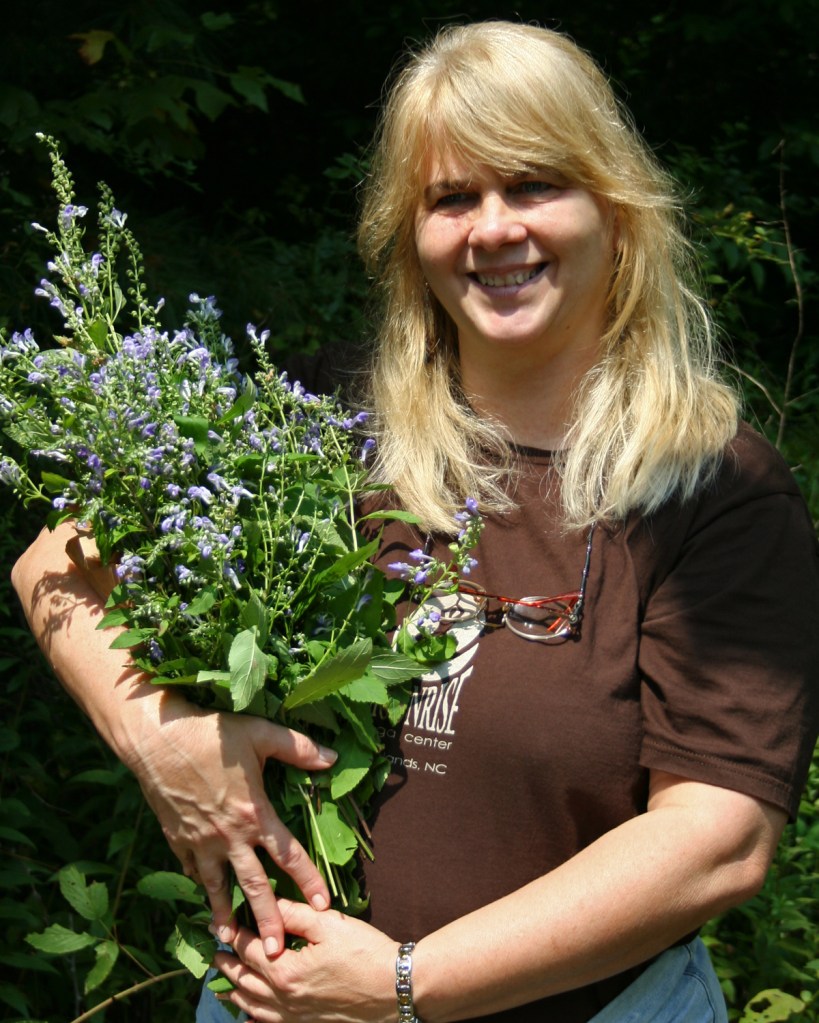
Because I live in the Appalachian Mountains of Western North Carolina, I am particularly interested in the plants that grow here. Skullcap is one of these and a North American native highly valued by the Cherokee people who use it as a nerve tonic and sedative. It likes to grow along the sunny edges of damp meadows near small bodies of water. As a perennial, it thrives in the moist eastern woodlands. Small pale blue or violet-blue flowers are not long-lived and bloom in the summer between June and September. These flowers are in one-sided racemes from leaf axils, which makes skullcap easier to identify. Tincture the aerial parts when fresh and in full bloom.

According to medical herbalist David Hoffman, skullcap is perhaps the most relevant nervine available to us in the Western materia medica.  It soothes nervous tension while strengthening the central nervous system and has a long history of use for petit mal seizures, sleepwalking, night terrors, and insomnia. It also relieves nervous irritability, tension headaches, and PMS tension. Skullcap lessens the symptoms of drug and alcohol withdrawal. Herbalist Patricia Kyritsi Howell says that skullcap is a specific remedy for mental fatigue and nervous exhaustion caused by over-stimulation and the effects of long-term stress.

My encounters with skullcap have been most rewarding. Gathering it in and of itself is a blissful occupation. I have made and used fresh skullcap tinctures for both myself (nervous exhaustion) and with clients. One skullcap success story resulted when a mother brought her 9-year-old son to me for a consultation regarding his bedwetting. Let us call him Jimmy. Jimmy had been sleepwalking, bedwetting, and having night terrors for as long as his parents could remember. They had recently adopted a sister for Jimmy from China. Consumed with caring for this new family member who had special needs, they no longer wanted to be up in the middle of the night with Jimmy. Besides, they were genuinely frightened and concerned for his safety and wellbeing when they would find him walking around in the middle of the night completely asleep. Jimmy did not know what was happening and woke in the morning with no recall. He was also diagnosed in school with ADD. I recommended skullcap tincture in the morning and evening, along with some dietary changes (no wheat and dairy) with a one-month follow-up. At one month, I tried contacting the mother, but she never got back to me. A few months later, I ran into them at a social gathering and asked how Jimmy was doing.

“Oh, great!” She said and went on to tell me about all the exciting things they had been doing.

“Great!” I said, “ but what about the night terrors, sleepwalking, and bedwetting?”

“Oh!” She answered back, mildly surprised. “That is completely gone, and he’s had no problems with that since. I can’t thank you enough!”

What I realized was that she had simply gotten on with her life and not looked back. Then she told me that they had been unable to make any dietary changes but that Jimmy had started to improve almost immediately with the skullcap. I stood looking at her, amazed.

On another occasion, a friend of mine’s daughter called me and sounded frantic. Her  9-month old baby girl wasn’t sleeping and woke to cry hysterically every night and had a hard time getting back to sleep. That had been going on for three months. The mom felt like she had tried everything, including more food to settle the baby’s stomach if she might be hungry and different food. She tried chamomile tea, homeopathic remedies, ruled out teething, and had the baby checked by a pediatrician. Do you want to know what worked? Skullcap. She gave her daughter five drops of alcohol tincture up to 3 X a day. The beauty of skullcap is that it is a tonic that can be used long-term and is not addicting.

TCM 5 Element Theory

From the perspective of Traditional Chinese Medicine’s five-element theory, I learned that skullcap is a cooling, bitter herb, which calms the mind and restores the shen to the heart (Fire Element). In TCM, the mind refers to the heart. In this context, the shen corresponds to the mind and consciousness, with the process of thinking accomplished by the heart. One of the hearts main duties is to store the shen, which describes spirit or the animating force of life. The word shen translated from the Chinese means both “mind” and “spirit.” As the integrator of consciousness and perception, the shen unites the disparate aspects of the self. When the shen is restless for any reason, as we have seen in the examples above, skullcap has the amazing ability to restore the shen. We may call this restlessness “nervous anxiety” or “nervous tension,” but the nervous system is what carries the electrical impulses generated by the brain and heart. Heart-Mind in TCM corresponds with the Fire Element and the Summer season. The benefits of Skullcap to reduce nervousness and treat insomnia by quieting the spirit or shen and helping it to stay centered in the heart cannot be over-estimated. Summer is the perfect time to be introduced to skullcap in her season of bloom So I invite you to bring her into your life in whatever manner you may choose and get to know her, for her gift is great. 

When the heart is serene, pain seems negligible.

– Inner Classic

Fresh Tincture Dosage: 30 drops (1 dropper full) 1:2 (75A:25W) 2-3 x a day

Can also be tinctured fresh using Vodka in the folk tradition.

References:

Making Plant Medicine, Richo Cech, Horizon Herbs

Medical Herbalism: The Science and Practice of Herbal Medicine, David Hoffmann, Healing Arts Press

Medicinal Plants of the Southern Appalachians, Patricia Kyritsi Howell, Botanologos Books

The Cherokee Herbal: Native Plant Medicine from the Four Directions, J.T. Garrett, Bear & Co

Learn more strategies for harmonizing the Fire Element in Thea’s work-at-your-own pace online class Heal Your Heart: Nervous System Health & the Fire Element at Five Element Academy.